Featured

Pre-departure Information

My photographer’s puppy and I

It’s a month after graduation and I’m packing a bulky headlamp and an elaborate first aid kit into the crannies of my suitcase. Unlike my pals, I am not uprooting my life to a glamorous new city and entering a consulting job with the promise of a great future. I am going to the West Indies to fulfil a sustainable beekeeping internship.

I am unqualified for this position. I recently graduated with a Bachelors of Politics and a concentration in Comparative Political Economy (which means I never took Intro to Biology), I have no experience beekeeping, and my knowledge of the Italian honey bee is limited to ouch it stings and wow, this female society is brilliantly organized!

But my inexperience never deterred me from pursuing what I want. In the spring of 2018, I embarked on an environmental science study abroad program in Costa Rica. I happened to be present when the Pitzer Firestone Center received its first hives of Central American stingless bees. The beekeepers held a workshop about the cultural significance and hive management systems for stingless bees. I was utterly fascinated. I returned to the States with the intention of working with bees. So when a friend of a friend notified me of an opportunity to work with bees in Jamaica, I jumped to apply!

Understanding the Hive, Understanding Jamaica

Admittedly, I am lost when I hear Patwa. My American socialized ears are unaccustomed to the West African accent and British English that is sprinkled with Spanish and expressed in a complex tone. The Western media exposes us to British, Australian, and New Zealand English, but not to Patwa and other varieties of Caribbean English. The threads of history are embedded in Patwa: the transatlantic slave trade, Spanish and British colonization. The Patwa tongue illuminates the resiliency of people on this island whose ancestors survived hundreds of years of oppression. Their descendants continue to fight for economic justice and political sovereignty under neoliberal colonialism. 

Today, transnational organizations encourage Jamaica and the greater Caribbean to keep bees as a means to eliminate rural poverty. Beekeeping is a strategy for economic development because (1) beekeepers can use local materials to build hives with little capital, (2) they are low maintenance, (3) they  have the potential to yield lucrative raw products such as honey, wax, and propolis, and (4) raw products can be used to create add-on products like lotions, candales, and medicine. 

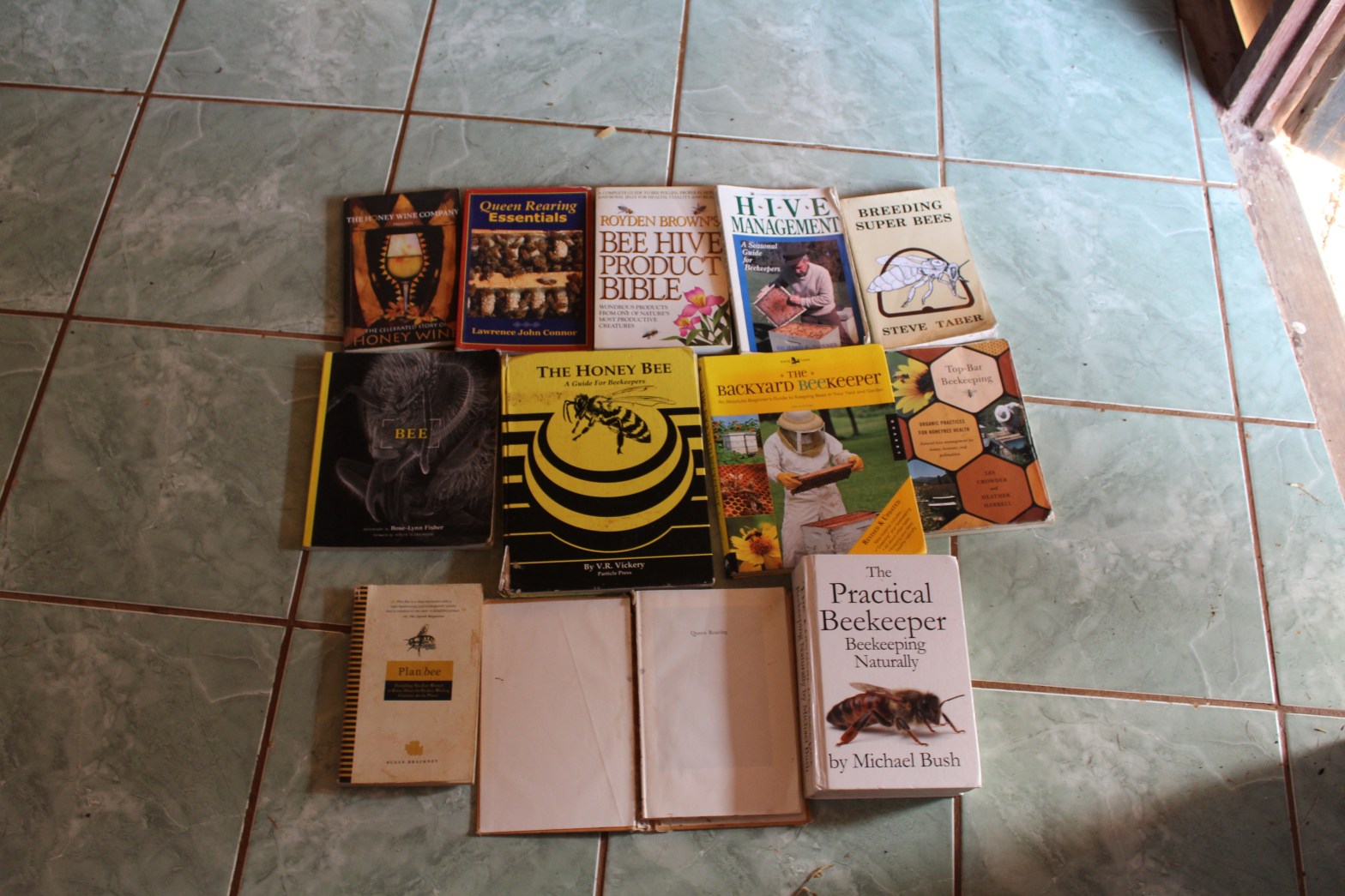
My first challenge as a beekeeper was developing an intellectual pool of knowledge about bees. During my first week at the farm, my mentor Agape provided a comprehensive PowerPoint about the Italian honeybee. This presentation encapsulated bee biology, pollination, development, mating behavior, the roles of the three different bees in the hive, and comb identification. During my afternoons off, I increased my understanding of the Italian honeybee by reading books and articles so that I could feel confident in the hives. 

Reading the Hive

A beehive is a book and each comb is a page in the book

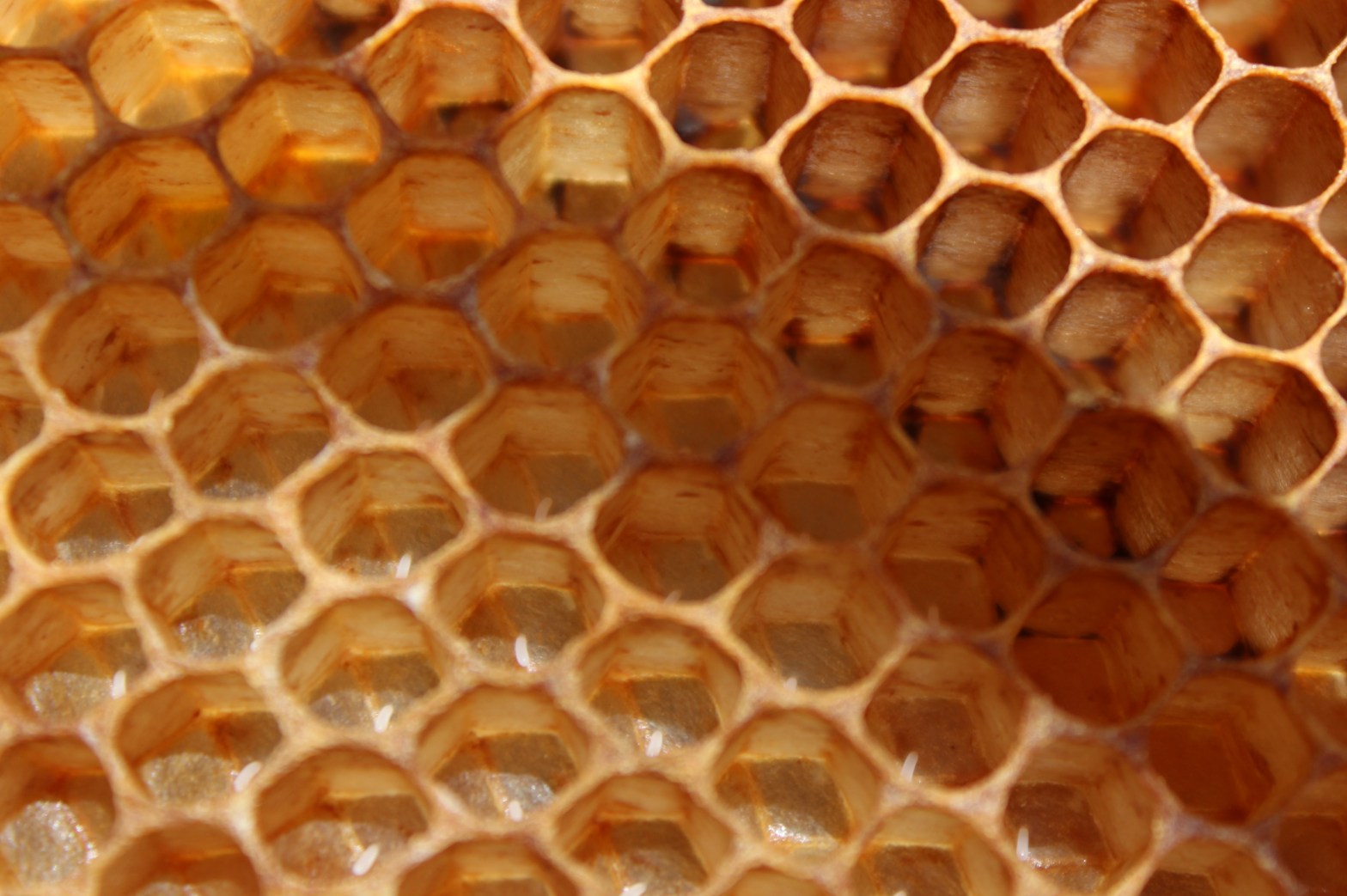
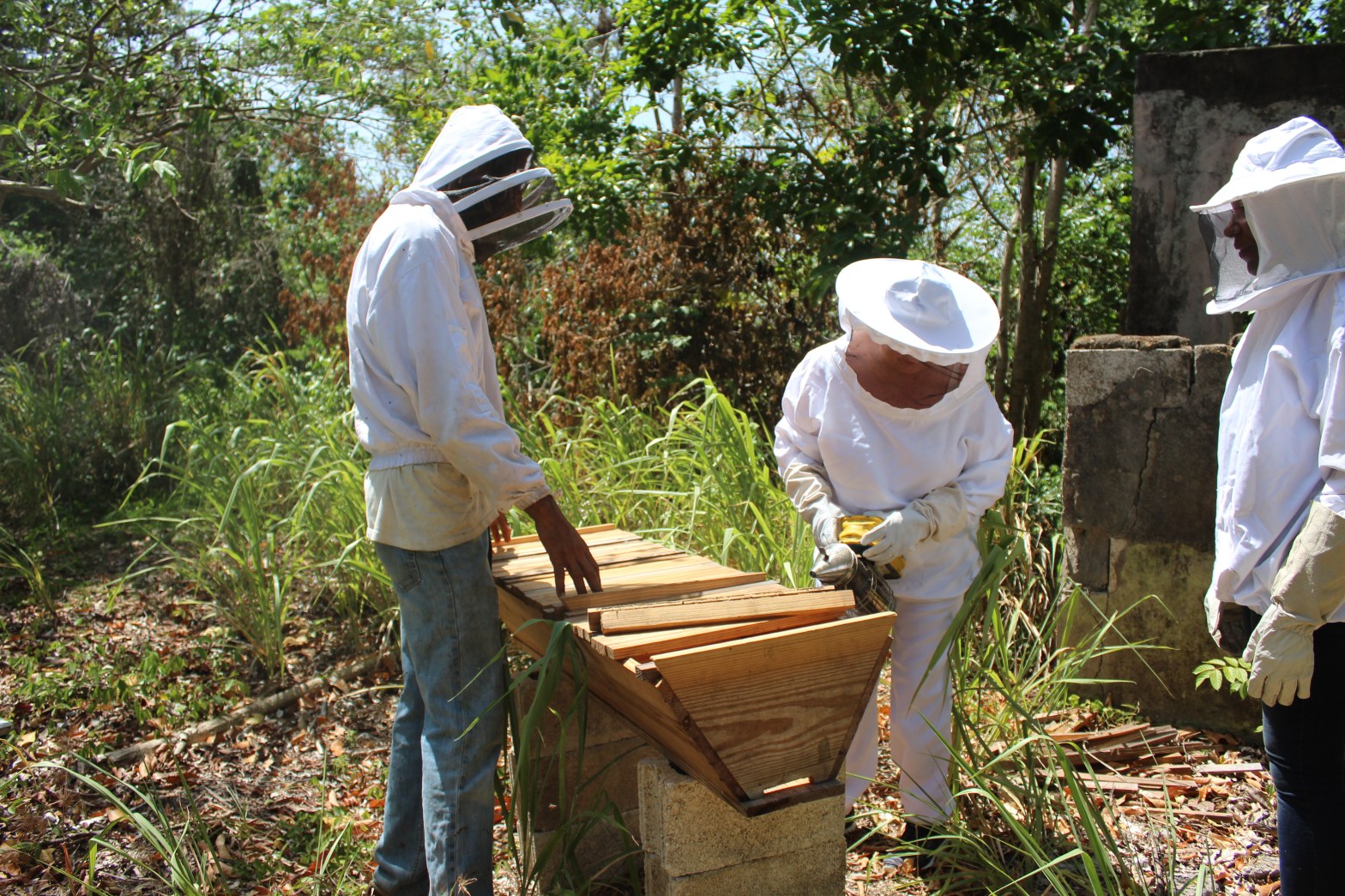
Once I gained a basic understanding of the Italian honeybee, I was ready to read the hives. My beekeeping instructor Kwao explained that a beehive is a book and each comb is a page in the book. We must read each page to understand the book. A literate beekeeper applies what they learned from books and experiences to identify the state of the hive. For instance, I learned to identify the age of the comb based on color (an old comb is darker, and a young comb is lighter). The age of the comb signals important information about the health and resiliency of the colony. Another example of reading the hive is assessing the status of the queen bee. It is difficult to spot the queen in a hive with tens of thousands of bees. I learned that freshly laid larvae is indicative that the queen was there at least three days prior. However, a greater assessment of the queen bee’s status is egg identification. I trained my eyes to spot bee eggs at the bottom of the comb, which tells us that the queen is present and laying eggs. These are a few examples of how I gained literacy as a beekeeper to gauge the health of the hive. I applied what I recently learned about Italian honeybee biology to determine the state of the hive.

Physical and Mental Endurance

Someone once recounted to me that Samurai warriors in ancient times underwent intense physical training and learned how to play a musical instrument. This training was combined to strengthen their mental and physical tenacity to maintain left / right brain balance, which ultimately helped them develop into well-rounded warriors. This concept parallels beekeeping, as beekeepers must pool their mental and physical capabilities to support the longevity and productivity of a hive.

Academia was the center of my life for the past 4 years. My body became accustomed to sitting still for hours while reading a book. I learned that I was capable of cranking out 6 pages of my senior thesis in 10 hours to meet a deadline for my advisor. College expanded my critical thinking, reading, and writing skills to new heights. While my energy was channeled into strengthening my academic abilities, my physical stamina was neglected. 

 I am not a physically active person in that I do not regularly exercise. I tried to be a gym person, but I will never be a gym person. However, there’s nothing I love more than embarking on a rigorous hike that leads to a beautiful sunset. I love the feeling of getting out of my head and into my body through rigorous exercise. Beekeeping helps me feel more comfortable with exerting myself physically. 

Handling a 5-pound honeycomb in the oppressive humidity while wearing a thick jacket was out of my comfort zone, to say the least. I had plenty of beekeeping-is-not-for-me moments. However, I trucked on and learned that I am capable of stretching myself in new ways.  

Another aspect of beekeeping that distinguishes it from an office job is a beekeeper’s ability to pool their physical and mental strength while working in a high-pressure environment. During my internship, I was stung 13 times! If I had known that we would be handling bees with our bare hands, I probably would have stayed far away from Jamaica. I can confidently say it was extremely painful, but it wasn’t the end of the world and it was totally worth it. Getting up close to a wild animal is unlike anything I’ve ever experienced. It’s absolutely terrifying and exhilarating. While bee stings can be avoided, they were a part of my experience. I learned how to gracefully get stung, gently remove the stinger to avoid upsetting the bees with frantic movements, and resume our efforts in the hive. 

They say your mind gives up before your body does, and I second that. I feel confident in my ability to remain calm and collected in a high-pressure situation.

Thank you, Thank you, Thank you!

Kwao—Thank you for allowing me to pick your brain on drives to and from the hives. Thank you for your kind patience when I was nervous and overheating. I  cherish all of the stories you recounted to me about your experiences with bees. I’ve been sharing them with people in my life who are equally as in awe as I am!

Agape—I am enchanted by your boundless knowledge and perspective on life. Thank you for sharing your sage wisdom on essential oils and plant medicine. I truly enjoyed each one of our lengthy conversations about anything and everything.

To the donors who made my internship possible, thank you for taking a chance on an unconventional opportunity. This unique experience afforded me with a barrage of transferable skills and life-long stories. I’ve developed a newfound appreciation for bees, sustainable beekeepers, and our food system. I am now actively seeking opportunities to go back into the hives.

Best wishes,

Yadira