Admittedly, I am lost when I hear Patwa. My American socialized ears are unaccustomed to the West African accent and British English that is sprinkled with Spanish and expressed in a complex tone. The Western media exposes us to British, Australian, and New Zealand English, but not to Patwa and other varieties of Caribbean English. The threads of history are embedded in Patwa: the transatlantic slave trade, Spanish and British colonization. The Patwa tongue illuminates the resiliency of people on this island whose ancestors survived hundreds of years of oppression. Their descendants continue to fight for economic justice and political sovereignty under neoliberal colonialism.
Today, transnational organizations encourage Jamaica and the greater Caribbean to keep bees as a means to eliminate rural poverty. Beekeeping is a strategy for economic development because (1) beekeepers can use local materials to build hives with little capital, (2) they are low maintenance, (3) they have the potential to yield lucrative raw products such as honey, wax, and propolis, and (4) raw products can be used to create add-on products like lotions, candales, and medicine.
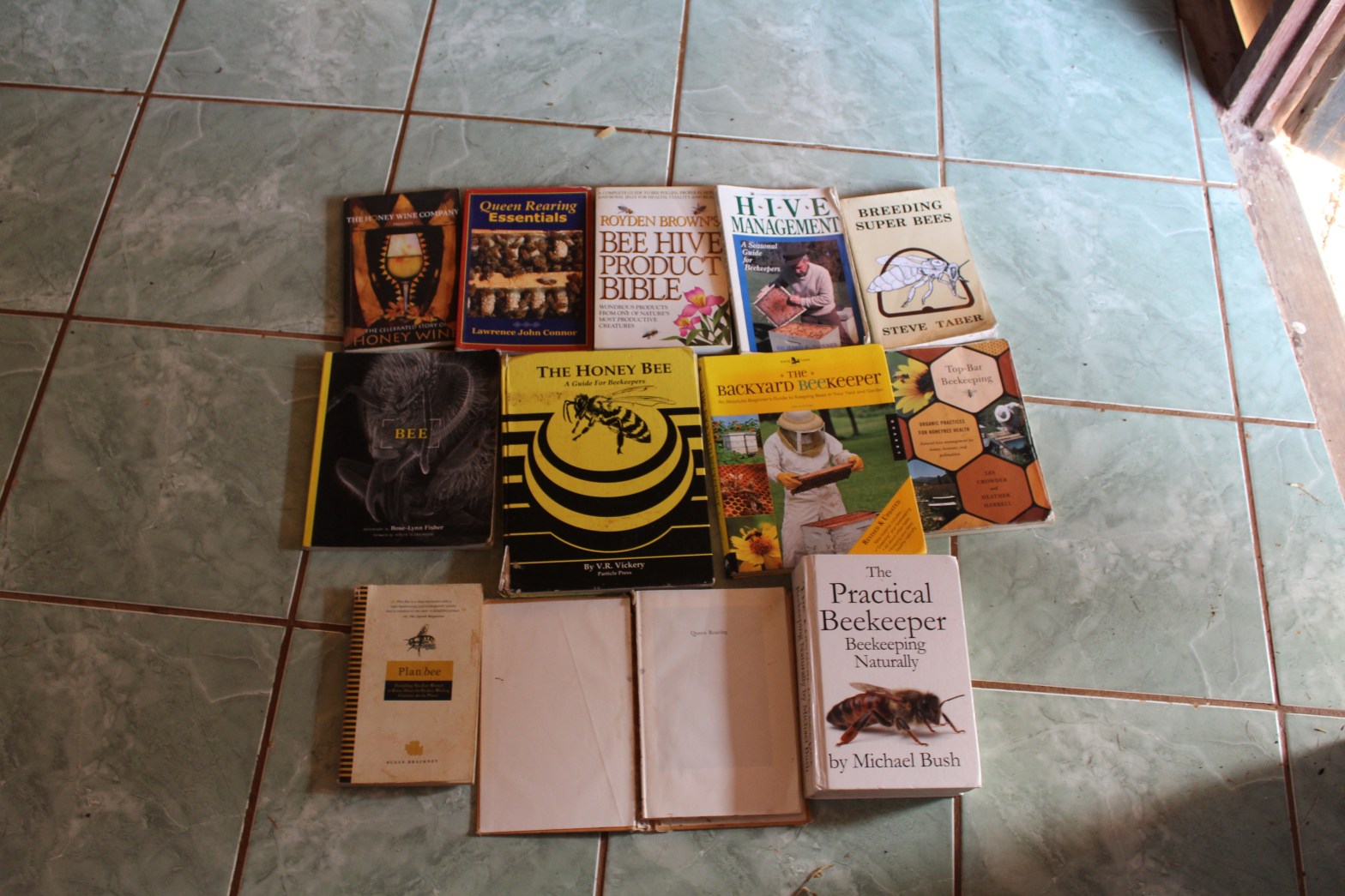
My first challenge as a beekeeper was developing an intellectual pool of knowledge about bees. During my first week at the farm, my mentor Agape provided a comprehensive PowerPoint about the Italian honeybee. This presentation encapsulated bee biology, pollination, development, mating behavior, the roles of the three different bees in the hive, and comb identification. During my afternoons off, I increased my understanding of the Italian honeybee by reading books and articles so that I could feel confident in the hives.

